A letter M shaped like a pair of soaring wings. Mazda has worn it since 1997, and the name beside it goes back to an ancient god of wisdom.
- Country
-
 Japan
- Active
- Since 1920
- Founded by
- Jujiro Matsuda
- Website
- Official website ↗
The Mazda logo through the years
-
 1936 Emblem of wings
Three M letters and Hiroshima's river emblem, drawn as wings.
-
 1959 A single m
A stylised lowercase m, used on all products.
-
 1975 The mazda wordmark
The corporate wordmark in Mazda Blue, with its distinctive z.
-
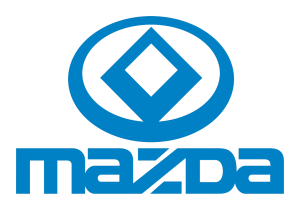 1991 Wings, sun and halo
A diamond in an oval, inspired by the symbol of Ahura Mazda.
-
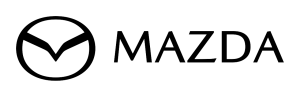 2025 Flat symbol
A flat brand symbol and new wordmark, used alongside the familiar badge.
From cork to cars
Mazda didn’t start with engines. It started with cork. The company was set up in Hiroshima in January 1920 as Toyo Cork Kogyo, and a year later Jujiro Matsuda, whom Mazda calls its substantial founder, became president and moved the business into manufacturing.
By 1927 the cork had been dropped from the name, which became Toyo Kogyo. The first vehicle followed in October 1931: the Mazda-go, a three-wheeled truck. Oddly enough, the company itself only took the Mazda name in 1984, when it became Mazda Motor Corporation.
Where the name comes from
Mazda explains its name in two layers. The first is Ahura Mazda, the god of harmony, intelligence and wisdom in the earliest civilisations of West Asia, a name the company also saw as a symbol of East meeting West. The second is closer to home. It was a way to honour Jujiro Matsuda, whose family name sounds almost the same.
The first badges
The very first mark belonged to the cork business: a T for Toyo and a C for Cork, framed by an outline shaped like the blade of a cork crusher. In 1928 it gave way to the character 工, meaning manufacturing, inside a circle. Employees called it the Maru-Kō mark.
The Mazda-go of 1931 carried the Mazda lettering together with three diamonds. Those belonged to Mitsubishi, which was selling the trucks at the time.
Once Mazda began selling through its own network in 1936, it needed a badge of its own. The result was the emblem of wings. Three M letters were combined with the emblem of Hiroshima City, a flowing river, and drawn as a pair of wings to stand for agility, high speed and rapid development. In 1959 a single stylised lowercase m replaced the wings and went on every product, a year before Mazda launched its first passenger car.
From a wordmark to the winged M
In 1975 Mazda introduced the corporate symbol that still sits at the centre of its communications: the lowercase mazda wordmark in Mazda Blue, with its unmistakable z. Mazda says it expresses an enterprising spirit, high quality and humanity.
The badge on the cars changed again in 1991. The new product emblem, a diamond inside an oval, was designed to evoke the symbol of Ahura Mazda, with its wings, sun and halo. According to Mazda UK, the edges were softened a year later to set it apart from the similar Renault logo.
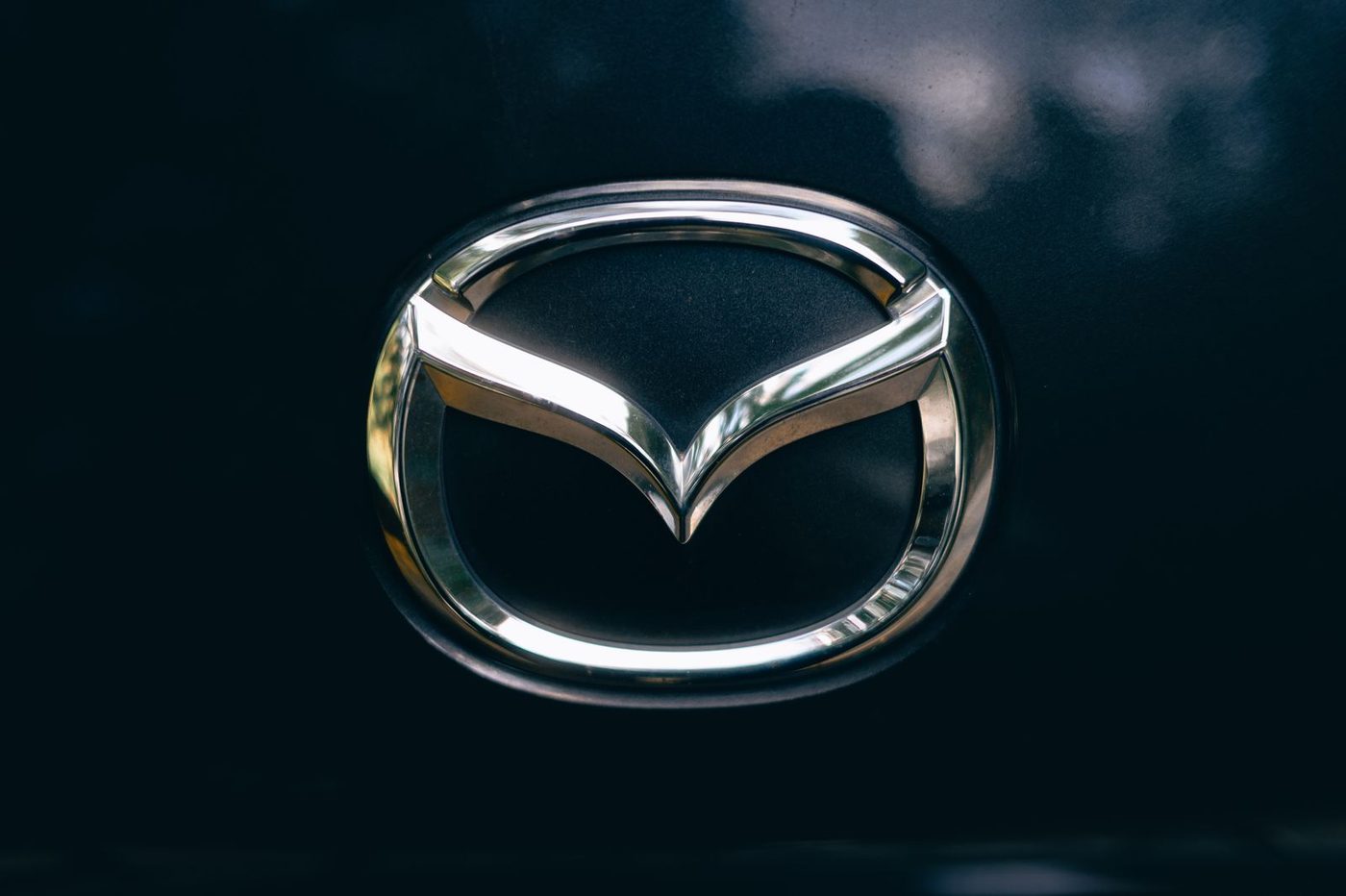
The emblem on today’s cars arrived in June 1997. It is the letter M drawn as a pair of soaring wings, and Mazda links it to a commitment to continuous self-reform and growth. In 2015 it gained a metallic, three-dimensional finish, and since 2018 the emblem and the wordmark have been designed to be used together.
Some people see an owl in the badge, others a tulip. It’s a fun game to play at a traffic light, but neither appears in Mazda’s own explanation of the emblem.
Going flat in 2025
In October 2025 Mazda introduced a flat version of its brand symbol and a new wordmark in capital letters. According to Mazda, the sleeker, bolder shape is easier to see, especially on screens. It doesn’t replace the familiar badge outright. The two are used side by side, depending on where the logo appears.
The cars behind the badge
Mazda has a habit of doing things its own way, and you can see it in the cars that carried each version of the badge.
Landmark Mazdas, decade by decade
- 1931: Mazda-go. Mazda’s first vehicle, a three-wheeled truck, and the first product to carry the Mazda name.
- 1960: R360 Coupe. Mazda’s first passenger car, a small two-door coupe launched in May 1960.
- 1967: Cosmo Sport. Mazda’s first car with a rotary engine: two rotors and a sleek two-seat body.
- 1978: Savanna RX-7. The first generation of the RX-7, developed, in Mazda’s words, under the simple theme of the pursuit of driving pleasure.
- 1989: MX-5. Unveiled at the Chicago Motor Show in February 1989. In 2005 Guinness World Records named it the best-selling two-seater open sports car in the world.
- 1991: 787B. Won the 24 Hours of Le Mans, the first overall victory there for a Japanese manufacturer and the first for a rotary engine.
- 2012: CX-5. The first of Mazda’s new-generation models.
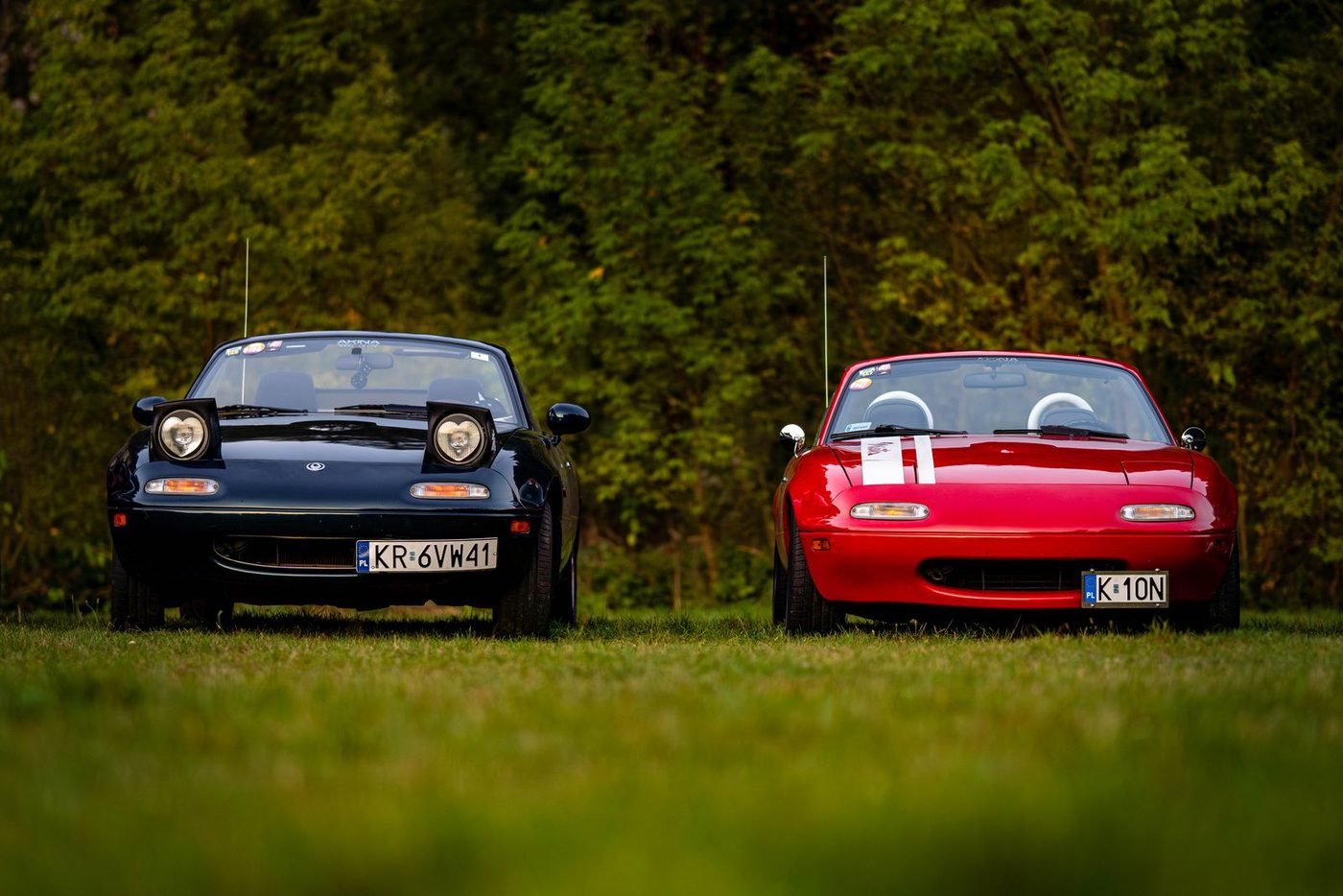
MX-5, first generation. Pop-up headlights and all.
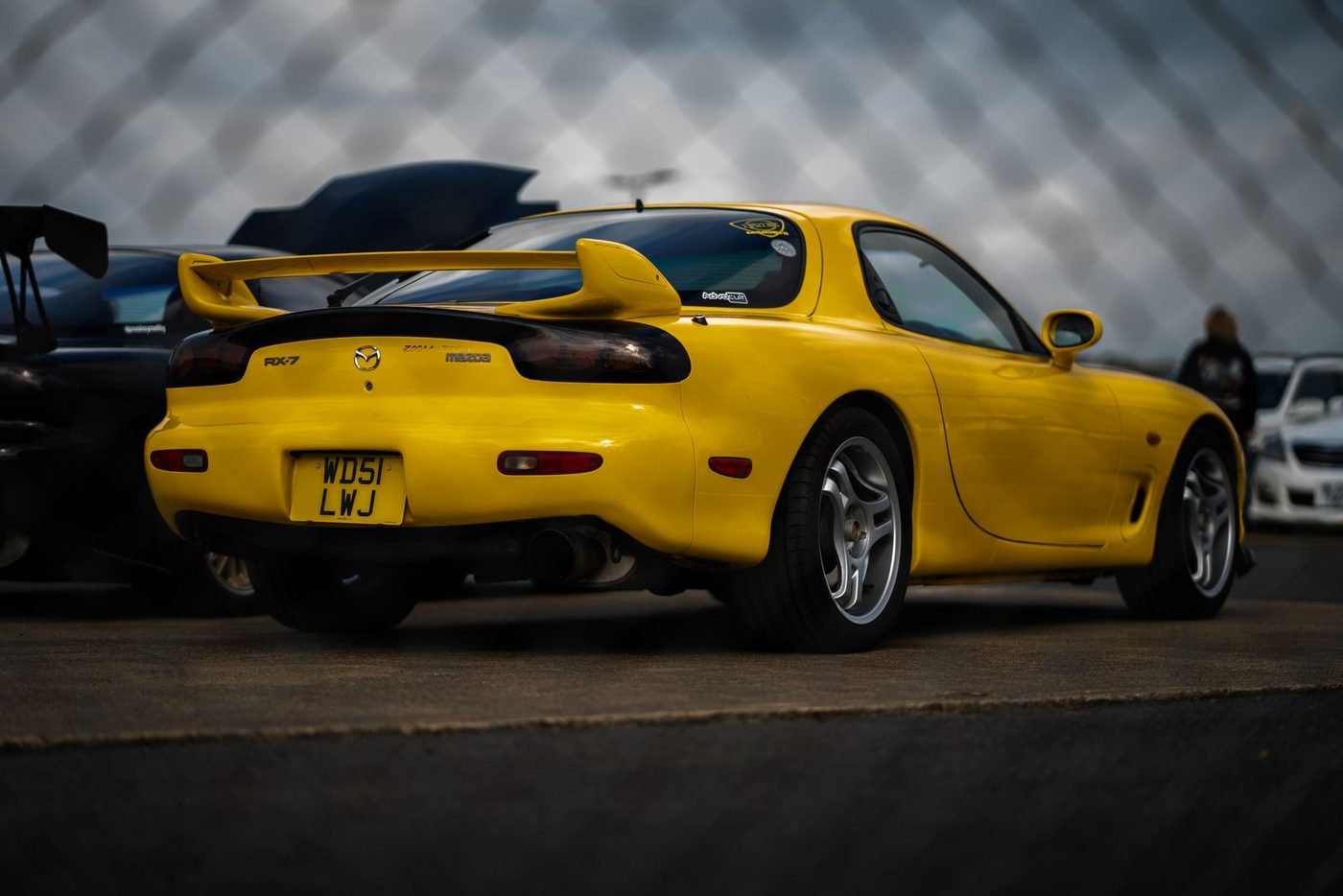
RX-7, third generation. Seen here at a car show in England.
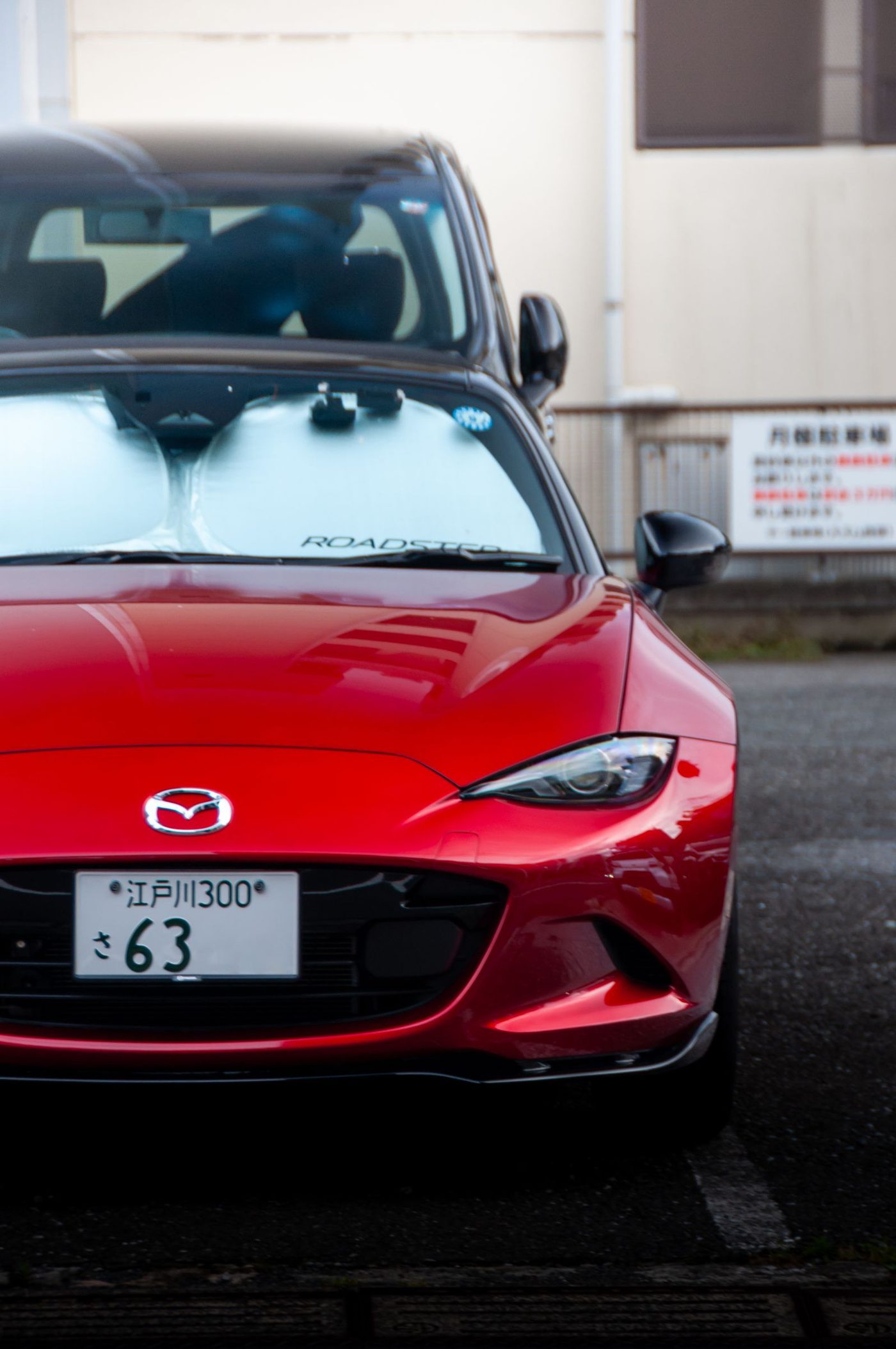
MX-5, fourth generation. The same idea, wearing the winged M.
Mazda is an independent carmaker, but not a lonely one. Since 2017 it has had a capital alliance with Toyota. For more on how badges like these are put together, see how car logos are designed.
Frequently asked questions
What does the Mazda logo mean?
According to Mazda, the emblem is the letter M shaped like a pair of soaring wings. It stands for the company’s commitment to continuous self-reform and growth.
Where does the name Mazda come from?
From Ahura Mazda, the god of harmony, intelligence and wisdom in the earliest civilisations of West Asia. The name also honours Jujiro Matsuda, whose family name sounds similar.
When did Mazda get its current logo?
The winged M emblem was introduced in June 1997. In October 2025 Mazda added a flat version and a new wordmark, which are used alongside the familiar badge.
Is the Mazda logo an owl?
Plenty of people see one, but no. Mazda describes the emblem as a letter M shaped like wings, and its explanation doesn’t mention an owl or a tulip.
Mazda at a glance
- Founded
- 1920
- Founder
- Jujiro Matsuda
- Country
- Japan
- Headquarters
- Fuchu, Hiroshima Prefecture, Japan
- Parent company
- Mazda Motor Corporation
- Current emblem
- Winged M, introduced in 1997
- Known for
- Rotary engines, the MX-5 roadster, driving enjoyment
- Website
- Official website ↗