Some car logos are so well known that they no longer need the brand name next to them. A shape, a symbol or a single animal is enough. Here are ten of the most famous car badges, in alphabetical order, with the real stories behind them. Several popular explanations turn out to be myths, and we point those out along the way.
1. Alfa Romeo: the cross and the serpent
The Alfa Romeo badge puts two symbols of Milan side by side: the red cross of the city and the serpent of the Visconti family, which once ruled Milan. Alfa Romeo credits the idea to a young illustrator, Romano Cattaneo, who noticed the serpent on a tower of the Castello Sforzesco. The company was founded in 1910, and the name Romeo was added after the businessman Nicola Romeo acquired the Portello plant in December 1915.
2. Audi: four rings for four companies
The four interlinked rings of Audi stand for the four Saxon carmakers that joined to form Auto Union on 29 June 1932: Audi, DKW, Horch and Wanderer. Since 2016 Audi has used flat, two-dimensional rings, because the chrome-effect version did not work well on screens.
3. BMW: Bavaria, not a propeller
The BMW roundel is often described as a spinning propeller against a blue sky. BMW itself calls that a myth. The blue and white quarters come from the colours of Bavaria, and the propeller story grew out of advertising years after the logo was registered in 1917. BMW’s own archive director has admitted that for a long time the company made little effort to correct it.
4. Citroën: the double chevron
The two chevrons of Citroën are older than any Citroën car. According to the brand’s own history, André Citroën bought a Polish patent in 1900 for a chevron-shaped gear used in milling, and built a business making those gears before he turned to cars. The badge is a stylised pair of gear teeth.
5. Ferrari: a fighter pilot’s horse
The prancing horse of Ferrari came from Francesco Baracca, an Italian fighter ace of the First World War, who painted a black horse on his plane. After meeting Baracca’s parents, Enzo Ferrari adopted the horse and set it on a yellow background, the colour of his home town of Modena. It first appeared on a Ferrari-run racing car on 9 July 1932.
6. Ford: the blue oval
The Ford script was drawn in the company’s early years, and Ford credits the engineer and draftsman C. H. Wills with designing it. According to Ford, the name first went inside an oval in 1907, and the script in a blue oval appeared on the radiator of the new Model A in December 1927.
7. Lamborghini: the founder’s bull
Ferruccio Lamborghini built tractors before he built supercars. The charging bull came straight from him: his zodiac sign was Taurus, and he liked to describe himself as strong as a bull. Many Lamborghini models are named after fighting bulls, such as the Miura and the Murciélago, though not all of them; the Countach takes its name from a Piedmontese exclamation of amazement.
8. Lotus: the founder’s initials
The letters above the word Lotus are the initials of the founder, Anthony Colin Bruce Chapman, set into a monogram. The current roundel, introduced in 2019, uses British Racing Green over a yellow background.
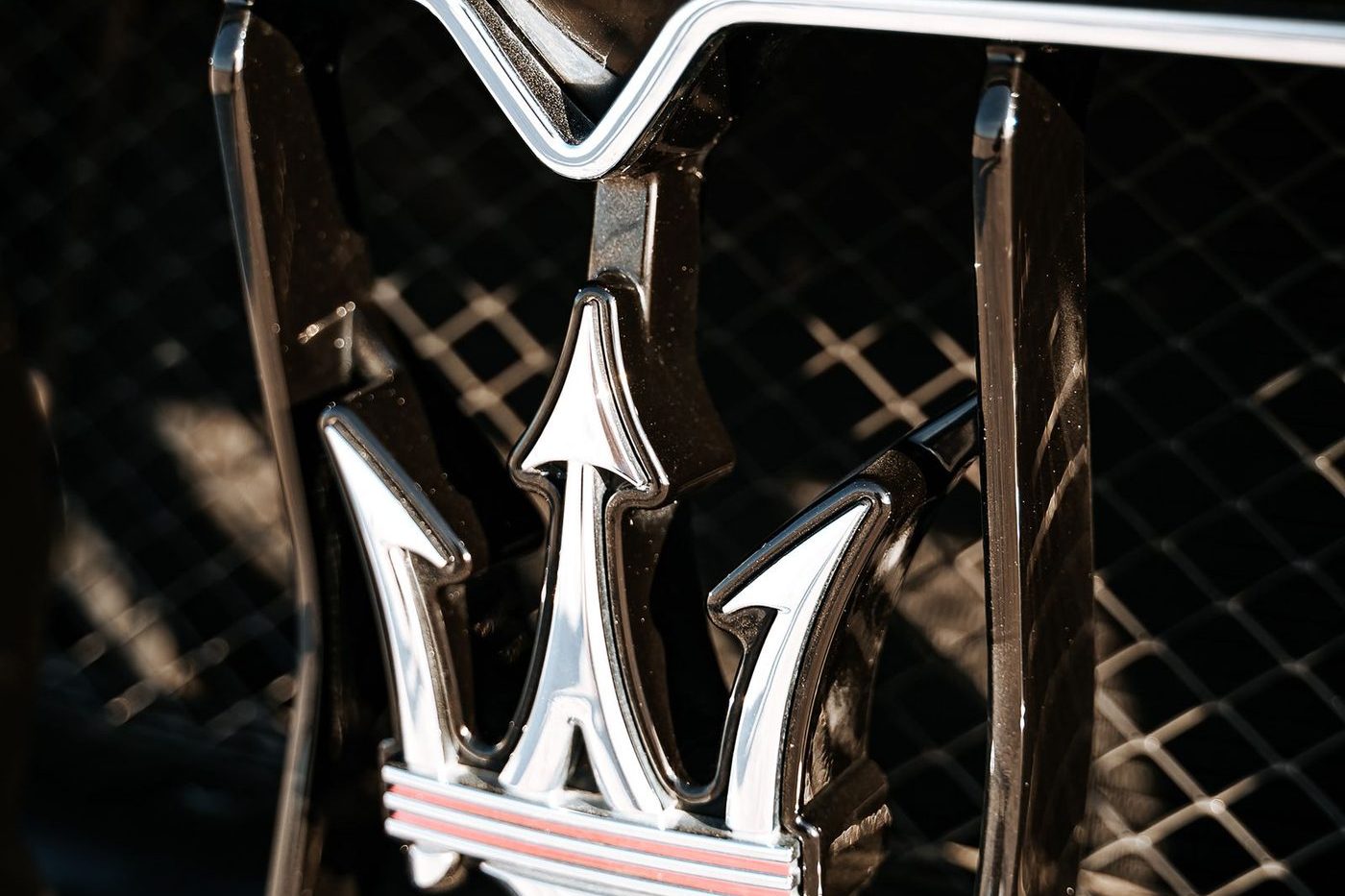
9. Maserati: Neptune’s trident
The Maserati trident was drawn by Mario Maserati, the brother who was more interested in art than in engines. It is taken from the statue of Neptune in Piazza Maggiore in Bologna, the city where the Maserati brothers had their first workshop.
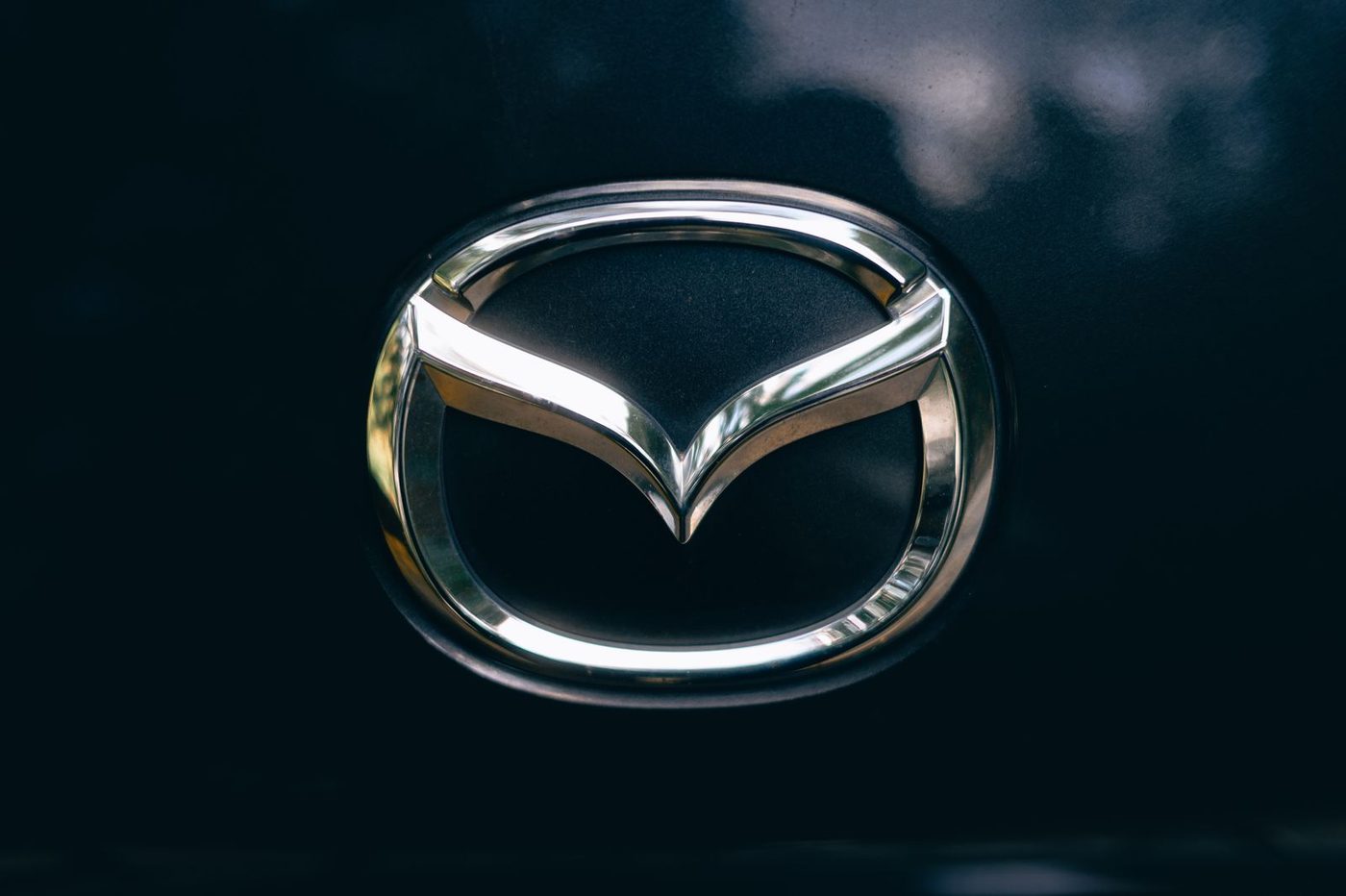
10. Mazda: a pair of wings
The emblem on today’s Mazda cars arrived in June 1997. At first glance it looks like a stylised M, and that is part of the idea, but Mazda describes it as an emblem of wings.
More logo stories
Each of these badges has its own page with the full history, the meaning of the colours and the cars that wore it. You can also read about classic car logos, see how car logos are designed, test yourself with Guess the Logo, or browse every car brand from A to Z.